

We hear a lot about calcium, magnesium and iron. Silicon, on the other hand, stays in the shadows, even though it is one of the most abundant minerals on Earth and a genuine structural element in living things. Here is a short overview of a fascinating, little-known trace element.
Silicon is the second most abundant element in the Earth’s crust, after oxygen. It is found in sand and rocks, but also in many plants.
What is less well known is that it is also present in our own bodies: traces of it are found in the skin, hair, nails, bones, blood vessel walls and connective tissues. This is what is known as a trace element: present in very small amounts, but widely distributed.

DID YOU KNOW?
Field horsetail (Equisetum arvense) is one of the plants richest in silica in the natural world. Used since antiquity, it owes its characteristic rigidity to its high silicon content, a fine example of the “structural” role this mineral plays in the plant world.
A structural mineral
Why do we call it a “structural” mineral? Because, in the plant world, it contributes to the rigidity of certain plants, such as horsetail.
Food sources
Silicon is found naturally in several everyday foods:
- Wholegrain cereals: oats, barley, wholemeal wheat.
- Certain vegetables such as green beans.
- Certain mineral waters, naturally rich in silica.
Conversely, a highly refined diet provides less of it, as refining removes some of the silicon contained in the outer layer of the grain.
Mineral silicon or organic silicon?
There are two main families. Mineral silicon (silica) is very widespread but generally poorly absorbed by the body.
Organic silicon refers to forms in which silicon is bound to organic molecules, which are considered more bioavailable. This is the form found in most silicon-based care and well-being products.
Please note: the use of organic silicon in a form to be taken by mouth is governed by regulations. This is one of the reasons why it is often offered for external use, in gel form.
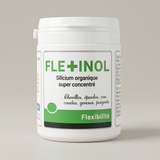
Flexinol: a massage gel with organic silicon
Flexinol from Bio-Gestion is a massage gel for external use, highly concentrated in organic silicon. It is massaged into the body’s areas of movement: ankles, knees, elbows, shoulders, neck and wrists.
Applied and massaged into the skin, it gives a pleasant cooling sensation, particularly welcome after physical activity or at the end of the day. Its gel texture is absorbed easily and leaves no greasy film.
Flexinol is a care and massage product. People enjoy it for the moment of relaxation it offers and for the feeling of well-being that comes from the massage itself.

How to use it
- Apply a hazelnut-sized amount of gel to the chosen area.
- Massage gently in circular movements until absorbed.
- Ideal after exercise, a walk or at the end of the day.
- For external use only. Avoid the eye area and mucous membranes.
In summary
Silicon is a fascinating structural mineral, found everywhere in nature and even in our own bodies.
Organic silicon is put to good use in massage gels such as Flexinol, for the pleasure of a relaxing massage and a cooling sensation every day.


