



With age, strength declines, mainly because of the gradual loss of muscle mass. After 50, you can lose 1 to 2% of your muscle each year if you do nothing. The good news? It is entirely possible to slow this process down considerably. Here is how.
Understanding muscle loss
This process has a name: sarcopenia. From the age of 50, muscle mass and strength gradually decline, by around 1 to 2% a year if nothing is done. The result: strength, independence and mobility that can diminish.
But here is the key point: muscle responds to training at any age. Even after 70 or 80, it is possible to regain strength. It is never too late to act.
1. Strength training, priority No. 1
This is by far the most important factor. The aim: 2 to 3 sessions of resistance work a week.
- Climbing stairs to work the legs.
- Press-ups (on the floor or, more easily, against a wall).
- Strength training with dumbbells or resistance bands, which are easy to use at home.
There is no need to set records: regularity matters more than intensity. Start gently and progress at your own pace.
2. Enough protein
Protein is the basic building material of muscle, and older people often need more of it than younger people. A common guideline: around 1.2 to 1.5 g of protein per kilo of body weight per day. For a person weighing 70 kg, that means between 84 and 105 g a day.
The priority is complete protein sources: fish, eggs, poultry and dairy products provide all the essential amino acids needed to maintain muscle. Spreading this intake across the day’s meals helps the body make better use of it.
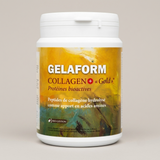
For those who struggle to meet their needs, a supplement can help. GELAFORM Collagen+ Gold provides protein in the form of collagen peptides, alongside a varied diet. Please note: collagen does not replace the complete protein on your plate. It adds to your daily intake; it does not take its place.

3. Vitamin D and muscle function
This is probably the most underestimated nutrient in this area. Vitamin D contributes to the maintenance of normal muscle function, an officially recognised claim. It also contributes to the maintenance of normal bones.
Yet vitamin D deficiency is common, especially in winter and among older people, whose skin produces less of it.
4. The omega-3s EPA and DHA
The omega-3s EPA and DHA contribute to the normal function of the heart (the beneficial effect is obtained with a daily intake of 250 mg of EPA and DHA).
5. Move every day
Outside your strength sessions, everyday movement counts enormously: walking for 30 to 45 minutes, gardening, cycling or swimming. Inactivity is muscle’s number one enemy. Every chance to move is a chance to preserve your strength.
6. Sleep well
It is often forgotten, but muscles recover mainly during sleep. Aiming for good-quality, sufficient and regular sleep is an integral part of looking after your muscles.
GELAFORM collagen
As part of this approach, GELAFORM Collagen+ Gold can accompany a healthy lifestyle as an additional source of protein. It replaces neither physical activity nor a balanced diet; it complements them.
The three top priorities
- Strength training or resistance exercises 2 to 3 times a week.
- Enough protein, spread across every meal.
- Vitamin D alongside regular physical activity.
Today, this is the best combination for preserving strength, independence and mobility as the years go by. And the best time to start is now.


